
Skip to main content Scroll Top

Neck pain treatment in Lancashire and beyond!

Other Pain Conditions

Addressing the causes of neck pain at ProHealth Chiropractic in the Northwest

Persistent neck pain is more than an inconvenience – it can affect your sleep, concentration, driving, work, and overall quality of life. Whether you wake with stiffness, struggle to turn your head, or notice frequent tension headaches, these are common signs that your neck may need attention. At ProHealth Chiropractic in Chorley, we support people across Lancashire with gentle, personalised chiropractic care for both recent and long-standing neck pain.
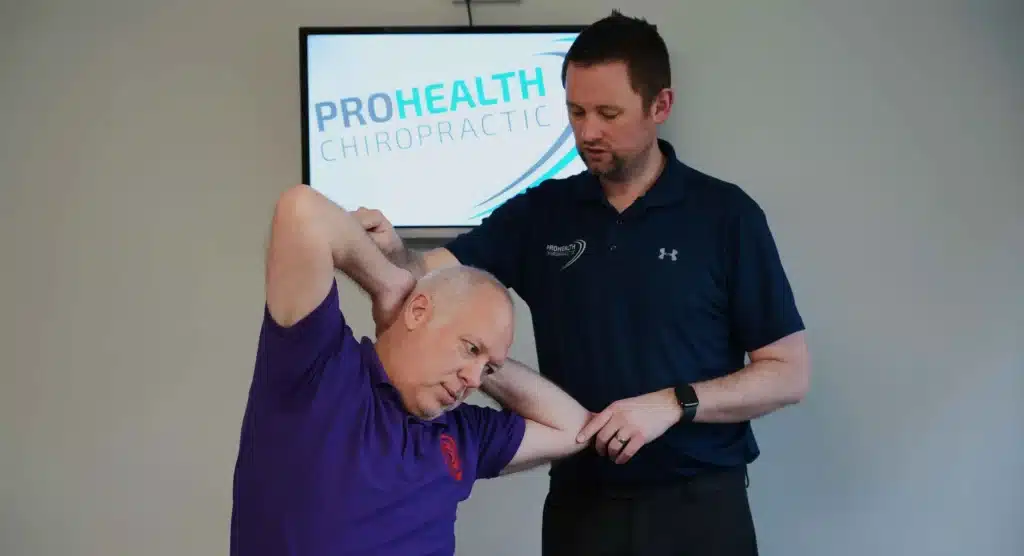
Thorough neck pain assessment and personalised care

Our approach focuses on understanding what may be contributing to your discomfort rather than simply trying to mask symptoms. We begin with a detailed examination of your neck (cervical spine), looking at posture, movement, muscle tension and how your joints are functioning. This helps us build a care plan tailored to you.

Your plan may include specific chiropractic adjustments, practical advice, and simple steps you can use at home to support your recovery.

We structure care in phases, so you know what to expect:

Relief – aimed at easing pain and improving comfort
Rehabilitation – focused on improving joint function and posture
Restoration – supporting long-term neck health and reducing the chance of recurring problems

Some people notice changes quickly, while others with longer-standing issues may need more time and consistency. Your progress can be influenced by:

How long you have had neck pain
Your daily activities and posture habits
General health and lifestyle factors
The nature of the underlying problem
Previous injuries or trauma

At the start of care, we may recommend more frequent visits, gradually reducing them as your neck improves. Many patients choose occasional maintenance visits to help them stay comfortable and active.

Understanding how your neck works

Your neck, or cervical spine, is designed for mobility but also has the significant role of supporting and protecting the upper part of your nervous system. The top two vertebrae, known as C1 (Atlas) and C2 (Axis), allow you to turn and tilt your head while helping to safeguard the transition between the brain and spinal cord.

When the joints of the neck are not moving well, this can contribute to stiffness, muscle tension, and irritation of nearby nerves. This may be linked with symptoms such as neck pain, reduced movement, headaches, shoulder tension, and upper back discomfort. Careful assessment and gentle chiropractic techniques aim to improve how these joints move and function.

Common contributors to neck pain we see in practice
Whiplash and road traffic accident injuries
Prolonged device use and “tech neck” posture
Sports injuries and minor trauma
Stress-related muscle tension
Cervical disc problems
Workplace ergonomics and desk posture
Sleep position
Age-related wear and tear
Nerve irritation

Neck pain can sometimes be accompanied by other symptoms. People often tell us they are also experiencing headaches, tingling in the arms, reduced range of motion, difficulty concentrating, shoulder tension, upper back discomfort, or disturbed sleep. Our aim is to assess how these may be connected and support you with a plan suited to your needs.

Real people, real results
Near 100 five-star reviews on Google